Getting Back Into Running After a Long Break: Where Do You Start?
Winter is winding down, the sidewalks are finally clearing, and with that comes the urge to lace up your running shoes again. For some, the break was intentional (because running through winter isn’t for everyone). For others, the body and mind made that call.
Either way, getting back into running brings up the same questions: where do you even start? Will you be as fast as before? How do you avoid getting injured?
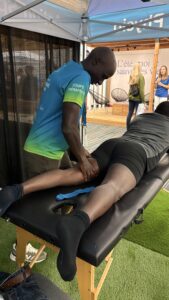
We spoke with Clara Têtu, runner and Courons MTL ambassador, who’s returning to running after a forced break this winter, as well as Latin Niyonsaba, physiotherapist and owner of Action Sport Physio Lachine, a partner of our events.
The Comeback Is Rarely a Straight Line
Clara had a busy fall. The half marathon at the Marathon Beneva de Montréal, another marathon, plus a series of trail races she jumped into with friends on a whim. Weeks of 70, 80, sometimes 100 km. Then, in November, the warning signs started showing up: lingering fatigue, unusual sensations, and a noticeable drop in energy. But she kept going. Until January, when her hip made the decision for her. Pain while walking, sitting, running. A near-complete stop.
“It was the right time for me to stop, even if it wasn’t something I wanted.”
What Clara went through is something Latin often sees. Stacking race goals without a proper recovery phase is one of the most common reasons runners end up needing a break. And once the body forces that pause, the instinct is usually the same: jump right back in where you left off, at the same pace, with the same expectations. That’s when overuse injuries show up.
“Rest is part of training,” he says. Not as a constraint, but as a core principle.
That said, a forced break doesn’t mean you have to stop moving altogether. Latin recommends cross-training during the transition—cycling, swimming, strength work, yoga. The idea is to keep your body active while lowering the overall load, giving it the time it actually needs to recover.
That was one of Clara’s biggest challenges during her recovery: “Running is how I channel my energy, manage my anxiety, and deal with everyday stress. So I had to find new ways to move that I enjoyed—but also learn when it was time to stop and not move.”

Getting Back: What Does It Actually Look Like?
This is where things often go sideways. You start feeling better, the weather improves, and suddenly you’re back at it like the last few months have never happened. Latin is clear on this: the biggest trap is relying on what you used to be able to do. Clara feels it firsthand: “Coming back definitely comes with challenges. I don’t have the same capacity I had before—to run fast, to run as long. Those are all things I’ll have to rebuild. But it does come back—and it’s always easier the second or third time.” Even something as basic as fuelling during a run needs to be relearned.
Latin’s guideline is simple: Increase your mileage by 10 to 15% per week, keep that progression going for three consecutive weeks, then scale things back on the fourth week to let your body adapt. And repeat the cycle. It’s gradual and predictable—and most importantly, it builds a solid foundation without sending you back into another forced break.
For Clara, that meant keeping things low-key: short lunchtime runs with colleagues. No pressure, no watch. “It feels like there are always little bumps along the way. I tried intervals last week and the pain came back, so I took a step back to come back stronger.” No panic. No frustration. Just listening to her body.
Latin also emphasizes a point that is often overlooked: seeing a running specialist, even if there are no apparent injuries, can make a real difference. A gait analysis can uncover imbalances that, over time, lead to exactly the kind of forced break Clara experienced. “If I had gone in November, I probably wouldn’t be here today.”
Another key takeaway from Latin—one that matters just as much mentally as physically—is to avoid comparing yourself. Not to who you were before the break. Not to others. Not to generic training plans online. “Look for advice that’s tailored to you—your body, your routine. What works for someone else won’t necessarily work for you.” Every comeback is different, just like every break.
What If This Break Changed Your Relationship With Running?
When Clara talks about getting back into running, something has shifted. Before the break, it was all about performance, time goals, discipline. Now? “I’m just so grateful to be able to move. Every run feels like a reset. I really enjoy it.”
She now runs at lunchtime with colleagues—part social time, part training. Her goal for the Montréal 21K isn’t about hitting time anymore. It’s about enjoying it, running pain-free, alongside her partner. That said, she hasn’t let go of performance entirely. Looking ahead to the Marathon Beneva de Montréal, she’s still allowing herself to aim for a time goal. Taking a gradual approach doesn’t mean letting go of your ambitions. It means giving yourself the best shot at reaching them.
Latin encourages that mindset: put the watch aside at first, run by feel, and let enjoyment come back into the picture. With experience, he says, runners learn to accept breaks and understand that you can’t be at your peak all the time. That’s not giving up: it’s wisdom.
Sometimes, a break is an opportunity to rethink why you run… and who you’re doing it for.

Your Body Is Talking. Are You Listening?
Clara admits she wasn’t used to listening to the signs. Running was her outlet, her way of managing anxiety and channel energy. Stopping felt counterintuitive. But looking back, the signs were there well before January.
Latin sees them all the time in his practice. Here are the ones you shouldn’t ignore:
- Constant fatigue despite getting 7–8 hours of sleep
- Losing the desire to run—when it starts to feel like a chore
- Trouble sleeping or feeling restless at night
- A drop in performance at work or school
- The usual runs feel much harder than they should
If you see yourself in any of these, it’s not a weakness. It’s your body asking you to listen. And as Clara’s experience shows, sometimes stopping is exactly what allows you to come back stronger.
“I think if you want your comeback to go well, you have to see it as something sustainable. It’s exciting to start again—you feel like doing it all the time. But the key is to aim for something that lasts, and to make sure you’re doing it the right way.”
Published on 03/25/2026
CATEGORY Training